Starting a vape vending business is not just a matter of buying a machine and finding an outlet. The machine sits inside a larger operating system: product authorization, retail licensing, venue access, payment processing, inventory, service, insurance, and written agreements.
This guide organizes the questions. It does not promise that a particular placement is legal or profitable.
1. Define the exact retail model
Write down what you intend to sell, who owns the inventory, who receives the customer’s payment, and which party is responsible for compliance. Those details affect licensing, taxes, insurance, contracts, and support responsibilities.
Questions to resolve include:
- Will the operator or the venue be the retailer of record?
- Which tobacco, nicotine, or non-tobacco products will be stocked?
- Who selects suppliers and confirms that products may legally be marketed and sold?
- Who handles refunds, chargebacks, damaged products, and customer questions?
- Who maintains the machine, payment terminal, connectivity, and age controls?
2. Research the jurisdiction before pitching the location
Federal rules are only one layer. State tobacco laws, licensing rules, local ordinances, venue access policies, and product restrictions can be more specific.
Create a file for every proposed placement. Record the address, venue type, applicable agencies, source links, contact notes, license requirements, review dates, and any advice received from qualified counsel. Start with the laws and compliance hub.
Do not assume that an ID scanner alone makes a location compliant. The characteristics of the facility and who may enter can matter independently of the device.
3. Qualify venues with evidence
Bars, clubs, and other adult-only venues may look attractive because of their audience, but each location should be evaluated on its own facts.
| Area | Questions to ask |
|---|---|
| Access | Is entry restricted to people 21 and older at all times? How is that enforced? |
| Demand | What products do adult customers already request? How often? |
| Placement | Is there a visible, monitored position with power and connectivity? |
| Security | Is the unit anchored, within camera coverage, and protected from impact or tampering? |
| Service | When can the operator restock, clean, test, and repair the machine? |
| Decision | Who can approve the placement and sign the agreement? |
A verbal “yes” is not the same as a qualified site or a signed placement agreement.
4. Model the unit economics
Build conservative, base, and strong scenarios. Avoid relying on a single revenue number.
Include:
- Machine, freight, installation, and initial inventory
- Card-reader hardware and processing fees
- Connectivity and software fees
- Venue commission or rent
- Insurance, licenses, taxes, and professional advice
- Restocking labor, mileage, shrink, spoilage, and downtime
- Warranty exclusions and out-of-warranty repairs
- Refunds and chargebacks
Estimate contribution margin per sale, then calculate how many completed sales the machine needs to cover its recurring costs and initial capital. Revenue is not profit, and a busy venue is not automatically a productive placement.
5. Evaluate the machine as maintainable equipment
Request written specifications and support terms. Confirm product-bay dimensions, capacity, electrical requirements, mounting method, payment compatibility, connectivity, telemetry, age-verification workflow, accessibility, warranty, parts availability, and escalation procedures.
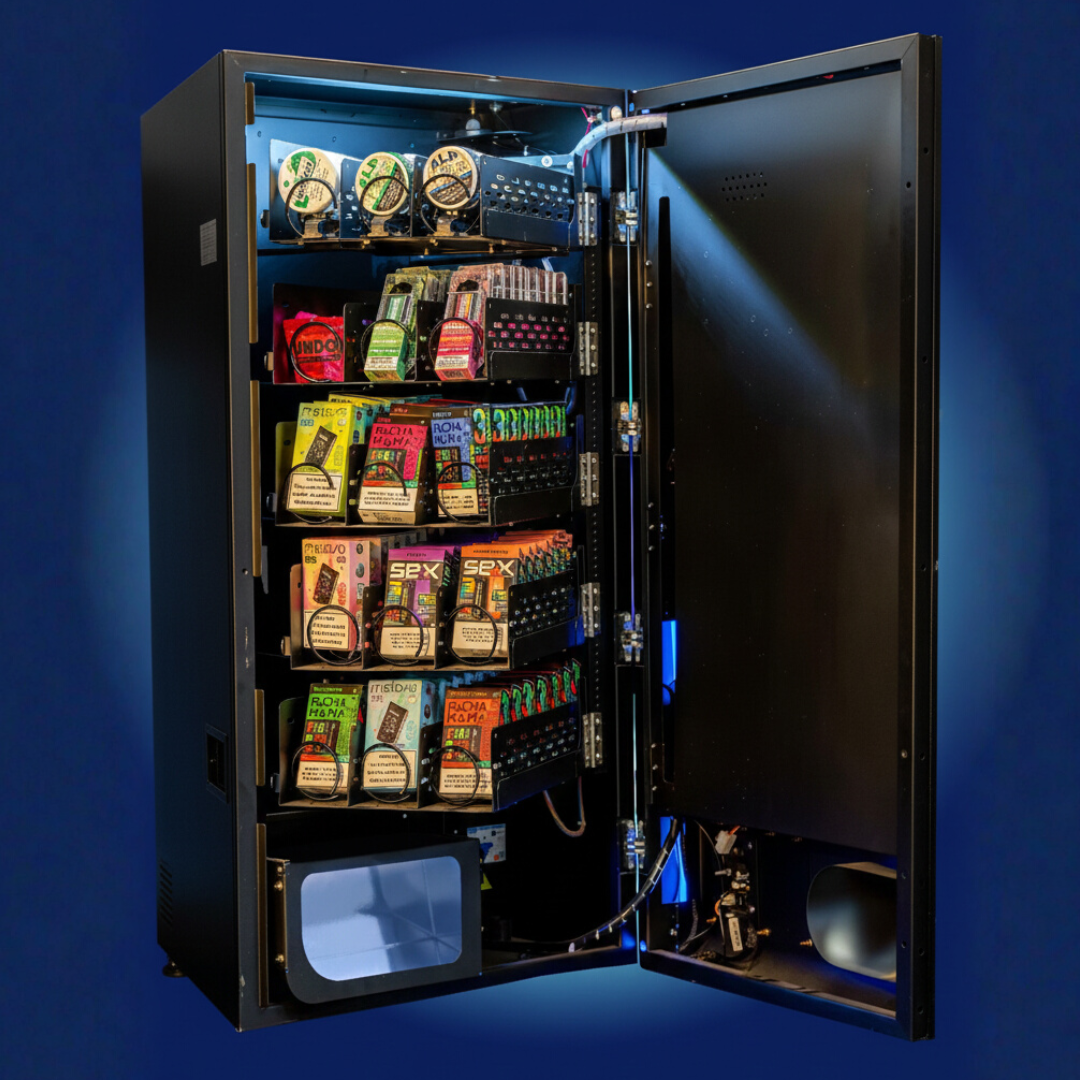
Test representative packages before committing to a large inventory plan. Package sizes change, and a coil or tray that works for one product may not reliably dispense another.
6. Put the venue agreement in writing
The agreement should identify the parties, location, term, termination rights, revenue-share calculation, payment timing, installation approvals, access hours, insurance, damage, electrical cost, relocation, exclusivity, prohibited products, compliance responsibilities, customer support, and removal procedure.
Have qualified counsel review the agreement and the regulatory allocation. A contract cannot make an unlawful placement lawful, but it can reduce uncertainty about who must do what.
7. Launch with a repeatable checklist
Before opening sales:
- Confirm licenses, approvals, and the current source file.
- Record the machine serial number, payment terminal, software account, and warranty.
- Photograph the installation, anchoring, power, network signal, and surrounding area.
- Test every selection with the actual product package.
- Test payment, refund, connectivity, alerts, and age-verification behavior.
- Add service contacts and escalation steps where venue staff can find them.
- Record opening inventory, prices, and the first service date.
8. Operate from records, not memory
Track stockouts, failed vends, refunds, downtime, product velocity, service minutes, mileage, venue payments, and customer complaints. Review whether the site still meets access and compliance requirements whenever venue operations change.
Scale only after one unit has produced a reliable operating record. A repeatable route is built from documented decisions, not a collection of unrelated placements.